
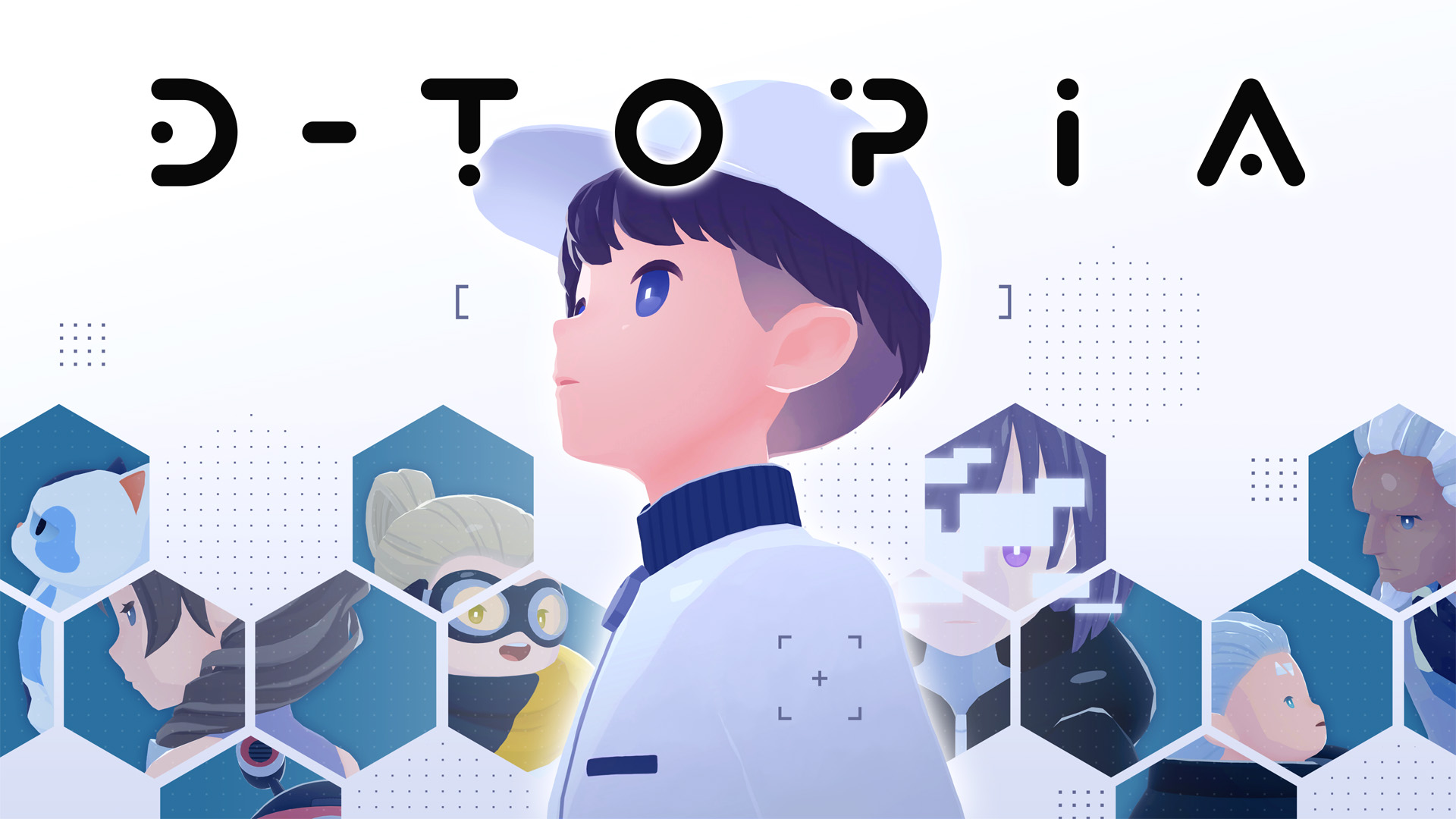

D-topia is a story-based puzzle adventure made by Marumittu Games and published by Annapurna Interactive (the same guys that published Stray and Outer Wilds!). Its smooth graphics, low poly yet detailed environments and wonderful soundtrack give this game a nice and cozy feel. When I first got into the game, I wasn’t sure if I’d enjoy it since this isn’t usually the type of game I’d sit down to play, but I was pleasantly surprised after giving it a try. In the game, the player assumes the role of a “Facilitator”, a sort of maintenance worker in D-topia, whose job is to fix technical problems around the residential facility and make the citizens’ overall life quality better. The whole facility is part of the “Utopia Project” – a project intended to maximize human comfort and happiness by creating a perfect society that’s managed by artificial intelligence.

The environment in the game is really beautiful, and the predominantly light color palette along with the futuristic architecture make it all one lovely sci-fi bundle of joy. Despite its beauty, at times it feels a bit restricting – the game’s linear nature forces you to usually start your day by getting prepared at your home, heading to the factory to do a couple of puzzles (more on them later) and then spend the afternoon meeting and talking to the cast of characters. There isn’t much exploration to be done, since many areas are closed off during certain parts of the day. Even though you’re not allowed to completely roam around, the locations that the game allows you to see each day are truly wonderful.

While there is a good amount of NPCs you can hear a line or two from, there is also a handful of residents that have their own story and personal struggle. The player can have meaningful conversations with this handful that include multiple choices that can strengthen your relationship with them. There doesn’t seem to be a way to ruin your relationship with any of these residents, since the game gives you a limited amount of dialogue choices, inevitably forcing you to be nice. There’s a feature called “Brain Meetings” that exists for summing up the recent events that have happened, helping you make important decisions more easily. These moments have the biggest impact – otherwise, you can just click through dialogue for the most part.

The main way you solve the technical problems within the facility is by doing some simple puzzles. I enjoyed this aspect of the game since it’s a good way to spice the gameplay up a bit. These puzzles get more difficult as the game progresses, and new variations and ways to solve them are introduced each day. One thing about the game’s progression that I don’t like, however, is that there currently isn’t multiple save files. If you wanted to get each ending (there are three in total) you’d have to restart the game from the beginning and replay the whole thing. The story isn’t very long, but going through all the dialogue again (with no option to skip any of it) damages the game’s replayability.

Conclusion
Despite its few shortcomings, this is certainly one of those games you play when you want a light, calm experience with no pressure whatsoever. I enjoyed the story quite a bit and loved most of the main cast of characters. I would definitely recommend this game to all gamers, regardless of the genre they usually prefer.


